
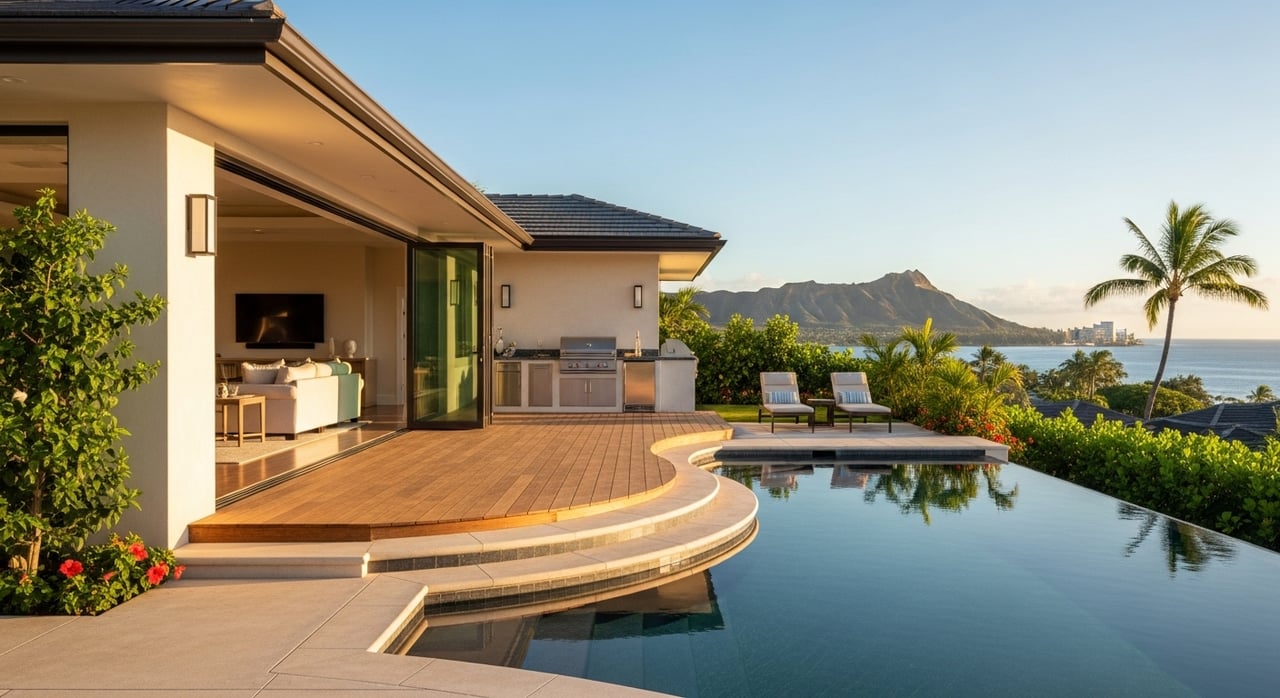
Renovating in Hawaii Loa Ridge can be smart and rewarding. The right financing helps you control cash flow, move faster, and protect your net proceeds when you sell. This guide explains the options that fit high‑value East Honolulu homes, how to pick the best path for your goals, and what to expect with HOA review and Honolulu permits. Use it to compare funding choices, build a clean timeline, and align upgrades with your sale and tax plans.
Why Financing Strategy Matters for Hawaii Loa Ridge Upgrades
Your financing choice affects speed, scope, and outcome. Cash is fast but ties up liquidity. HELOCs let you draw funds as you go, which is helpful for design‑driven work. A cash‑out refinance can set a fixed rate for a large project. Renovation mortgages add structure and inspection milestones that can keep complex jobs on track.
Financing also shapes your timeline to market. Carrying costs, permit timing, and draw schedules can add weeks. If you plan to sell, match financing to your launch date and any tax moves you may make. Simple, well‑sequenced funding often leads to cleaner execution and stronger buyer confidence.
Renovation Financing Options: Pros, Cons & Use Cases
Below are the main paths Hawaii Loa Ridge owners use, with practical notes for our market.
Cash or liquid reserves
- Pros: Simple, fast, no underwriting or closing costs. Strong leverage in contractor scheduling.
- Cons: Concentrates risk and ties up capital.
- Best for: Crisp cosmetic upgrades, light kitchen and bath refreshes, and final punch‑list work before photography.
Home Equity Line of Credit (HELOC) or second mortgage
- What it is: A revolving line secured by your home. Many Hawaii banks and credit unions offer HELOCs with variable rates. See examples from local lenders like Bank of Hawaii.
- Pros: Flexible draws for phased projects. Often quicker to open than a full renovation mortgage.
- Cons: Variable rates. Lenders review loan‑to‑value and insurance.
- Best for: Multi‑stage upgrades where scope may evolve with design.
Cash‑out refinance (conventional or jumbo)
- What it is: Replaces your current mortgage with a larger one and gives you cash at closing.
- Pros: One fixed payment, predictable cost of capital.
- Cons: Closing costs and underwriting time. If your total loan exceeds conforming limits, you will need jumbo terms. The 2025 FHFA baseline is $806,500, with Hawaii’s one‑unit high‑cost ceiling at $1,209,750. Many Hawaii Loa Ridge homes exceed these thresholds, so jumbo often applies. Reference: FHFA conforming limits.
- Best for: Large, one‑time renovations when you want a fixed rate.
FHA 203(k) Rehabilitation Mortgage
- What it is: FHA‑insured loan that combines refinance or purchase with renovation funds. There is a Limited 203(k) for non‑structural work and a Standard 203(k) for major work. Funds are held in escrow and released after inspections. Learn more at HUD.
- Local note: FHA county loan limits apply. Many Hawaii Loa Ridge properties exceed Honolulu’s FHA limits, which can make this product impractical for higher‑value homes.
- Best for: Owner‑occupants whose values align with FHA county limits.
Fannie Mae HomeStyle Renovation mortgage
- What it is: Conventional loan that bundles refinance or purchase with renovation, using an as‑completed appraisal. Some lenders permit partial upfront draws for materials. Details at Fannie Mae HomeStyle.
- Local note: Conforming and Hawaii high‑cost limits still apply. Above those, explore jumbo or pair with a second lien. See FHFA limits.
- Best for: Middle‑to‑upper budgets where a single‑close structure helps control scope.
VA options for eligible veterans
- What it is: VA cash‑out refinance, energy‑efficient add‑ons, or lender‑specific VA renovation products. Lender caps can apply to the renovation portion. See VA cash‑out.
- Best for: Eligible veterans seeking simple access to equity for upgrades.
Construction and bridge loans
- What they are: Short‑term, draw‑based loans for major additions or complex repositioning, sometimes paired with a takeout refinance or sale. Bridge loans can cover gaps between projects or closings.
- Pros: Tailored to large or phased construction.
- Cons: More inspections and fees. Higher rates than long‑term mortgages.
- Best for: Structural work, additions, and staged luxury renovations.
Private lenders or hard money
- Pros: Very fast, flexible underwriting, creative collateral.
- Cons: Higher rates and fees. Shorter terms.
- Best for: Compressed timelines, unique properties, or when speed to market outweighs cost.
Contractor or point‑of‑sale financing
- Pros: Quick approvals for smaller scopes.
- Cons: Rates and terms vary. Some products do not pair well with mortgage draws.
- Best for: Targeted upgrades where a HELOC is not practical.
Coordinate financing with tax strategy
- If you plan a 1031 exchange or a Delaware Statutory Trust move after selling an investment property, line up financing timelines with your CPA and qualified intermediary. Funding choice influences your holding period, basis in improvements, and closing dates.
How to Evaluate ROI and Prioritize Upgrades
Not every dollar returns the same value. Use a clear framework to focus on items luxury buyers notice first and that boost appraisal support.
- Cosmetic refresh: Paint, lighting, hardware, fixtures, and minor carpentry deliver quick lift.
- Systems and structure: Roof, windows, retaining walls, and MEPs safeguard value and reduce buyer objections.
- Amenity upgrades: Kitchens, baths, outdoor kitchens, lanais, pools, and landscaping shape lifestyle appeal.
Quick scoring checklist:
- Market impact: Does the change move buyer emotion and comparables.
- Cost and payback: Estimate total installed cost and likely price lift.
- Time and complexity: Consider HOA review, permits, inspections, and lead times.
- Disruption: Can you phase work without delaying the list date.
When to go big vs targeted:
- Full remodel: Consider when the layout is dated, mechanicals need work, and you plan to hold for a new market cycle.
- Targeted upgrades: If resale is near, invest in sightline improvements, owner’s suite, kitchen surfaces, and outdoor living. In our climate, durable tropical materials and low‑maintenance finishes can reduce future buyer friction.
Local cost context: Building in Hawaii often costs more than the mainland due to shipping, labor, and regulatory complexity. Analyses point to materially higher costs, so carry a larger contingency. See reporting on Hawaii rebuild costs at CNN Business. For specific remodel ranges, local estimates place kitchen projects from roughly $13,000 to $60,000 and up depending on scope and finish. See Honolulu kitchen cost ranges.
Step‑by‑Step: How to Finance a Renovation
- Define scope and budget
- Walk the property with a designer or experienced agent. Draft an A‑B‑C scope list. Add a 10 to 25 percent contingency for island projects.
- Talk to lenders early
- Get pre‑approved for the products that fit your value and timeline. Many Ridge homes exceed conforming limits, so confirm if you need jumbo or a second lien. See FHFA limits.
- Get licensed contractor bids
- Request 2 to 3 detailed bids from Hawaii‑licensed contractors. Hawaii requires licensed pros for larger jobs and permit work. Review rules at the state site: Contractor licensing.
- Plan HOA and permits
- Hawaii Loa Ridge requires ARC review for exterior work and sets contractor insurance and operating rules. See HLROA contractor info. Honolulu’s DPP requires permits for many projects, including retaining walls over 30 inches. Review DPP permits.
- Finalize financing package
- Submit plans, budget, timelines, and contractor documents. For FHA 203(k) and HomeStyle, expect draw schedules and inspections. See HUD 203(k) and HomeStyle.
- Manage construction and draws
- Schedule inspections on time. Keep invoices, change orders, and lien releases organized.
- Closeout and prep to list
- Secure final inspections and permits. Capture warranties. If energy upgrades qualify, claim Hawaii Energy rebates where applicable. See Hawaii Energy rebates. Stage, photograph, and launch.
Working with Local Professionals: Lenders, Contractors, CPAs & Agents
- Lenders: Choose a team that knows jumbo and renovation products, plus local draw processes.
- Contractors and designers: Prioritize luxury experience, transparent bids, schedule control, and the insurance levels HLROA requires.
- CPAs and wealth advisors: If you plan a 1031 exchange or DST, get timing advice early so improvements, holding period, and sale dates align.
- Real estate agent: A design‑savvy agent can help right‑size the scope, sequence work for photos and showings, and position upgrades to justify your target price.
Set a cadence: Weekly check‑ins, written updates, budget to actuals, and a shared milestone list. This keeps financing, work, and marketing in sync.
Timeline, Permits & Practical Closing Considerations
Expect lender draws to track inspections and milestones. Honolulu DPP has faced backlogs, which can delay approvals and start dates. See AP News on DPP delays. Never list with open permits unless your strategy and buyer pool allow for it. Build buffer time into both the renovation schedule and the listing calendar.
Local Considerations for Hawaii Loa Ridge Sellers
Respect the neighborhood’s standards and your buyers’ expectations. Favor clean architecture, quality finishes, and outdoor living that frames views. Plan for HOA steps and site logistics early, including ARC review, contractor passes, delivery windows, and debris control. The HLROA posts applications and rules here: HLROA.
Choose resilient materials that perform in a tropical, ocean‑exposed setting. Plan for shipping and specialty lead times. For retaining walls, additions, and system changes, confirm permit needs through Honolulu DPP. Using licensed contractors is required for permitted work and larger scopes per State rules.
How Francein Hansen and BridgeWise Can Help
You deserve an advisor who can connect design, financing, and after‑tax results. My team blends luxury marketing, renovation advisory from a design‑build background, and BridgeWise coordination with CPAs and qualified intermediaries for tax‑aware exits. We help you choose the right funding path, introduce trusted lenders and contractors, and prioritize the upgrades that move your price.
Ready to plan your project and sale timeline. Schedule a Strategy Session with Francein Hansen to map your scope, budget, and market launch.
Key Local Rules and References
- HOA and ARC at Hawaii Loa Ridge: HLROA
- Honolulu permits and retaining wall thresholds: DPP permits
- Contractor licensing in Hawaii: State guidance
- Conforming and high‑cost loan limits: FHFA 2025 limits
- FHA 203(k): HUD overview
- Fannie Mae HomeStyle: Program details
- DPP backlog context: AP News
- Hawaii Energy rebates: Rebates for homes
FAQs
Do I need HOA approval before I apply for financing
For exterior work in Hawaii Loa Ridge, plan for Architectural Review Committee (ARC) review. Some lenders want approved bids and a clear scope. Applying in parallel is fine, but allow ARC time so your draw schedule stays on track. See HLROA.
Which projects require a permit in Honolulu
The City and County of Honolulu requires permits for structural work, many electrical and plumbing jobs, and site or retaining walls over 30 inches. Check scope at DPP permits.
Are delays common with permits on Oʻahu
Honolulu DPP has reported backlogs at times. Build a time buffer into your plan and submit early. See context at AP News.
Will FHA 203(k) or HomeStyle work for a high‑value Ridge home
It depends on loan limits and lender participation. Many Ridge homes exceed conforming or FHA caps. Review FHFA limits and discuss jumbo options with a local lender.
What energy rebates or credits can lower my net cost
Hawaii Energy offers select rebates on qualifying measures, and federal clean‑energy credits may apply. Verify current rules and vendor participation. Start at Hawaii Energy.