
Selling in Koko Kai can raise a bigger question than most owners expect: should you simply polish what you have, take on a major renovation, or sell the property as a rebuild opportunity? If your home sits on a prime lot, has dated finishes, or needs work near the shoreline, the answer can have a major impact on both timing and net proceeds. In this market, the smartest move is usually the one that matches your property’s condition, location, and regulatory realities. Let’s dive in.
Why this decision matters in Koko Kai
Koko Kai sits within the broader Hawaiʻi Kai market, where pricing can differ sharply from island-wide averages. In a July 2025 market report, Hawaiʻi Kai’s single-family median sales price was $1,617,500, compared with $1,150,000 for Oʻahu overall. That gap shows how much buyers in this area can value location and property quality.
At the same time, sellers are not operating in a carefree market. Honolulu’s 2025 annual resale report showed single-family homes spent a median of 23 days on market, sellers received a median 98.3% of original asking price, and active inventory averaged 15.7% above 2024 levels. In October 2025, Hawaiʻi Kai inventory was up 51.7% year over year, and 70% of single-family sales at $1.9 million and above closed below original asking price.
That means presentation and pricing discipline matter. If you over-improve without a clear resale ceiling, you may not get that money back. If you under-prepare, buyers may discount your home more aggressively than they would have in a tighter market.
When a light refresh makes the most sense
For many Koko Kai sellers, a light refresh is the smartest path. This is often true when the home already fits the lot well, the floor plan is functional, and the main issue is tired presentation rather than major design or structural problems.
Buyers have become more selective about condition. In 2025 research, 46% of REALTORS® said buyers were less willing to compromise, which supports the idea that visible condition matters more than ever. The same research found that 29% of agents said staging increased the dollar value offered by 1% to 10%, while 49% said staging reduced time on market.
If you want the highest impact for the least disruption, focus on what buyers see first. The most practical refreshes often include:
- Painting the entire home
- Painting one or two key rooms
- Deep cleaning
- Decluttering
- Minor touch-ups
- Curb appeal improvements
- Entry updates that improve first impressions
These are not glamorous projects, but they work. NAR’s 2025 Remodeling Impact Report ranked whole-home paint and one-room paint among the top seller-recommended projects, and 91% of sellers’ agents said decluttering was a common recommendation.
In higher-end coastal neighborhoods, design quality also matters. Among sellers’ agents who used staging services, 63% said quality of design was the most important factor, ahead of price at 51%. In other words, a polished, well-edited presentation can be more valuable than simply spending more money.
Refresh projects with strong visual payoff
If your budget is limited, prioritize the items that shape a buyer’s first impression. Those upgrades often create more value than expensive work hidden behind walls.
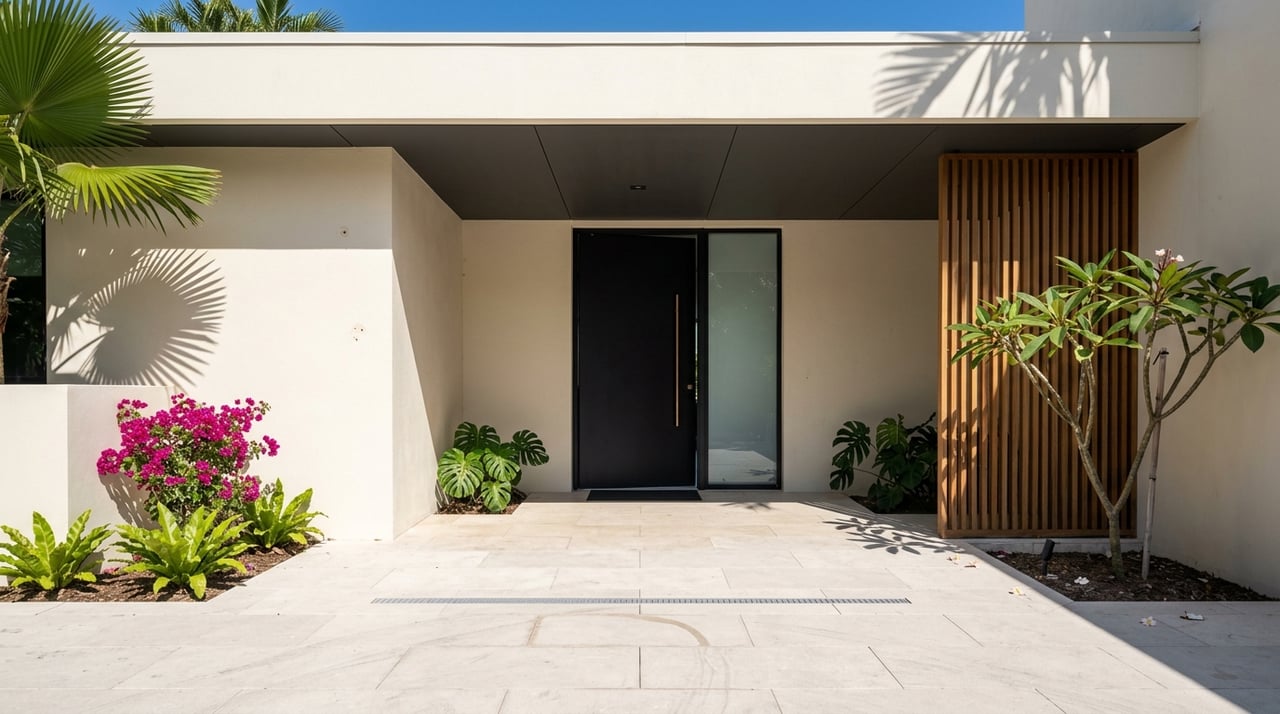
One example from the 2025 Remodeling Impact Report stands out: a new steel front door had the highest estimated cost recovery at 100%. That does not mean every seller should replace a front door, but it does reinforce a simple point. Buyers notice the entry, the approach, and the immediate feel of the home.
In Koko Kai, a well-chosen refresh may include:
- Crisp interior paint in a clean, cohesive palette
- Refined landscaping and tidy hardscape edges
- Updated lighting in key entertaining spaces
- Fresh hardware and fixture touch-ups
- Professional cleaning and window washing
- Thoughtful staging that supports indoor-outdoor living
If your home already has strong bones and a desirable setting, this level of preparation may be enough to compete well.
When a deeper renovation may be worth it
A deeper renovation can make sense when the layout still works, but the home feels clearly dated in the areas buyers value most. In Koko Kai, that often means kitchens, bathrooms, flooring, roofing, and the primary suite.
According to NAR’s 2025 Remodeling Impact Report, kitchen upgrades, bathroom renovations, new roofing, and primary-suite additions scored well with both homeowners and REALTORS®. These are the kinds of improvements that can help an older home feel more aligned with buyer expectations, especially in a luxury coastal setting.
Still, deeper renovation is not just a design decision. It is also a time, permitting, and risk decision.
Renovation in Honolulu can trigger permits quickly
In Honolulu, permits are required for work covered by the building code, including installation, alteration, or repair of building, electrical, gas, mechanical, or plumbing systems. That means what starts as a straightforward remodel can become a more complex permit-driven project once you move beyond cosmetic updates.
Site work can add another layer. Honolulu’s grading procedures require a permit when grading changes drainage patterns, exceeds 50 cubic yards of cut or fill, or exceeds 3 feet in vertical depth at the deepest point. On East Oʻahu lots, that can become relevant faster than many owners expect if a project touches the yard, driveway, retaining walls, or drainage.
This matters because carrying costs do not stop while you renovate. In a market with more inventory and some pressure on final sale prices, the delay and uncertainty of a major project can outweigh the upside.
How to decide if renovation pencils out
Before you renovate, ask a few practical questions:
- Will the updated home clearly compete at a higher price point?
- Is the floor plan already strong enough to justify the investment?
- Can the work be completed without triggering a long, uncertain timeline?
- Are you improving for resale, or for personal taste?
- Will the likely increase in value exceed the renovation cost and carrying costs?
This is where local pricing discipline matters most. In a neighborhood like Koko Kai, a beautiful renovation can absolutely improve marketability. But a seller should still confirm that the likely resale ceiling supports the scope of work.
When rebuilding deserves a serious look
Sometimes the lot is the real asset. If the site, view, or location is more valuable than the current structure, rebuilding may deserve serious consideration.
This is most common when the existing house has functional limits that are hard to solve through renovation. It can also come up when the home’s condition is poor enough that pouring money into it does not create the best end product.
But in coastal Hawaiʻi, rebuild decisions carry more complexity than many owners realize. The state identifies coastal hazards that include erosion, tsunamis, hurricanes, sea level rise, flooding, subsidence, and earthquakes. For properties near the shoreline, these issues can affect feasibility, timeline, design, and cost.
Coastal rules can shape the rebuild path
If a property is in the Special Management Area, the SMA permit is the first permit required for development. Honolulu’s shoreline setback rules also apply to lands within the shoreline setback area.
Before grubbing, grading, or construction, the shoreline and setback line must be identified on the ground by a state-licensed surveyor. For some owners, that alone changes the conversation from “Should I rebuild?” to “What is realistically buildable here?”
There is another key point for older homes near the water. Honolulu’s shoreline setback rules state that reconstruction of a nonconforming structure within the shoreline setback area requires a shoreline setback variance. Any hardship analysis must consider shoreline conditions, erosion, surf, flood conditions, and the lot’s geography.
So while a teardown may reduce design compromises, it does not remove regulatory complexity. In some cases, it may increase the importance of early due diligence.
Shoreline and survey issues matter early
For homes closest to the water, shoreline certification and coastal permitting may also be part of the process. Hawaii’s land survey division handles shoreline certification, and state coastal rules govern shoreline certifications and coastal-district permitting.
That is why rebuild analysis should happen before you assume the highest-value buyer will be a builder or end user planning new construction. A premium lot can be highly attractive, but buyers will still weigh entitlement risk, timing, and design constraints.
The simplest decision framework
For most Koko Kai sellers, the cleanest framework is this:
- Refresh when the house already fits the lot and the market, and the main issue is presentation
- Renovate when a stronger finished product can still be delivered within a realistic resale ceiling
- Rebuild only after shoreline, SMA, grading, flood, and timing issues are clearly understood
That framework keeps emotion from driving the decision. It also protects you from overspending in a market where buyers are paying attention to both quality and value.
Do not overlook your net proceeds
The best choice is not always the option that creates the flashiest before-and-after. It is the option that gives you the strongest overall outcome after cost, time, and tax consequences are considered.
For that reason, the most useful team often includes a listing agent, architect or designer, contractor, land surveyor, permit specialist, and CPA or qualified intermediary. In a neighborhood like Koko Kai, design, buildability, and after-tax proceeds are often tightly connected.
If the property is an investment property, Section 1031 may be part of the conversation because IRS guidance says it applies to real property held for investment or productive use in a trade or business, not property held primarily for sale. A personal residence generally does not qualify. For a primary home, the IRS says sellers may exclude up to $250,000 of gain, or up to $500,000 on certain joint returns, if the ownership and use tests are met.
That does not mean tax strategy should drive every design choice. It does mean your sale plan should be evaluated through both a market lens and a net-proceeds lens.
A strategic approach for Koko Kai sellers
In today’s Koko Kai market, most sellers benefit from disciplined decision-making rather than instinct alone. A clean refresh often wins when the property already shows well and simply needs sharper presentation. A renovation can work when the layout is still right and the value gap is clear. A rebuild can be powerful when the lot is the story, but only if you understand the coastal and permitting path upfront.
If you are weighing these options, the goal is not just to sell. The goal is to choose the path that supports your timeline, protects your capital, and positions your property for the strongest realistic outcome. If you want a design-aware, tax-conscious strategy for your Koko Kai sale, connect with Francein Hansen to schedule a strategy session.
FAQs
Should you refresh or renovate a Koko Kai home before selling?
- A refresh is usually best when the floor plan works and the home mainly needs better presentation, while renovation may make sense if visible areas like the kitchen, bathrooms, flooring, or roofing are clearly dated and the likely resale value supports the cost.
Does a remodel in Koko Kai usually require permits?
- In Honolulu, permits are required for work covered by the building code, including installation, alteration, or repair of building, electrical, gas, mechanical, or plumbing systems, so many non-cosmetic remodels do require permits.
When should a Koko Kai seller consider rebuilding instead of renovating?
- Rebuilding deserves a closer look when the lot, view, or location is more valuable than the existing structure and when renovation would still leave major design or functional compromises.
Do shoreline rules affect Koko Kai teardown or rebuild plans?
- Yes, properties within shoreline setback areas or the Special Management Area may face added requirements such as shoreline identification, setback review, and in some cases a shoreline setback variance for reconstruction of nonconforming structures.
What pre-sale updates tend to matter most in Koko Kai?
- The most practical updates are often painting, deep cleaning, decluttering, curb appeal improvements, selective touch-ups, and high-quality staging that helps buyers connect with the home immediately.
Can tax planning affect a Koko Kai selling decision?
- Yes, because your best option depends on net proceeds as well as sale price, and for some investment properties a 1031 exchange may be relevant, while many primary residences are evaluated under the home sale gain exclusion rules instead.