
If your idea of home is sunrise over Koko Head and a sweeping ocean horizon, Kahala Kua will speak your language. Set on a gated ridge above Poola Street, this hillside enclave pairs privacy with dramatic views and refined architecture. Choosing the right home here often comes down to style, layout, and build quality. In this guide, you’ll learn the three architectural styles that define Kahala Kua and how design details, materials, and views shape everyday living and long‑term value. Let’s dive in.
Why Kahala Kua stands out
Kahala Kua is a gated, hillside community developed largely in the mid‑1990s at the top of Poola Street. Lots are generally sloped or rim‑oriented and often run 10,000 to 20,000 square feet or more. Homes were sited to capture sunrise and ocean vistas toward Koko Head while taking advantage of prevailing trade‑wind ventilation. Listings in the area commonly trade in the low to mid millions, with larger or newly renovated homes commanding higher prices.
The styles you see most
Kahala Kua’s architecture reflects a moment when Hawaiian regional design and modern luxury came together. You’ll find a mix of contemporary island homes, Mediterranean‑influenced villas, and fully custom design‑build estates. Each style handles the ridge, views, and outdoor living in a different way, which is why knowing the cues helps you compare value. For historical and regional context, the University of Hawai‘i’s resources on Hawaiian modern design highlight many of the principles you see here today (Hawaiian modern design overview).
Contemporary island design
Contemporary island homes lean into clean geometry, large openings, and seamless indoor‑outdoor flow. Expect floor‑to‑ceiling glass, sliding or folding walls, and expansive lanais that make the view part of daily life. Roofs are often low or shallow‑pitched with deep overhangs to shade glass and reduce heat gain. Interiors typically place the great room and primary suite along the view side, sometimes with split levels or courtyards to work with the slope.
Mediterranean‑influenced homes
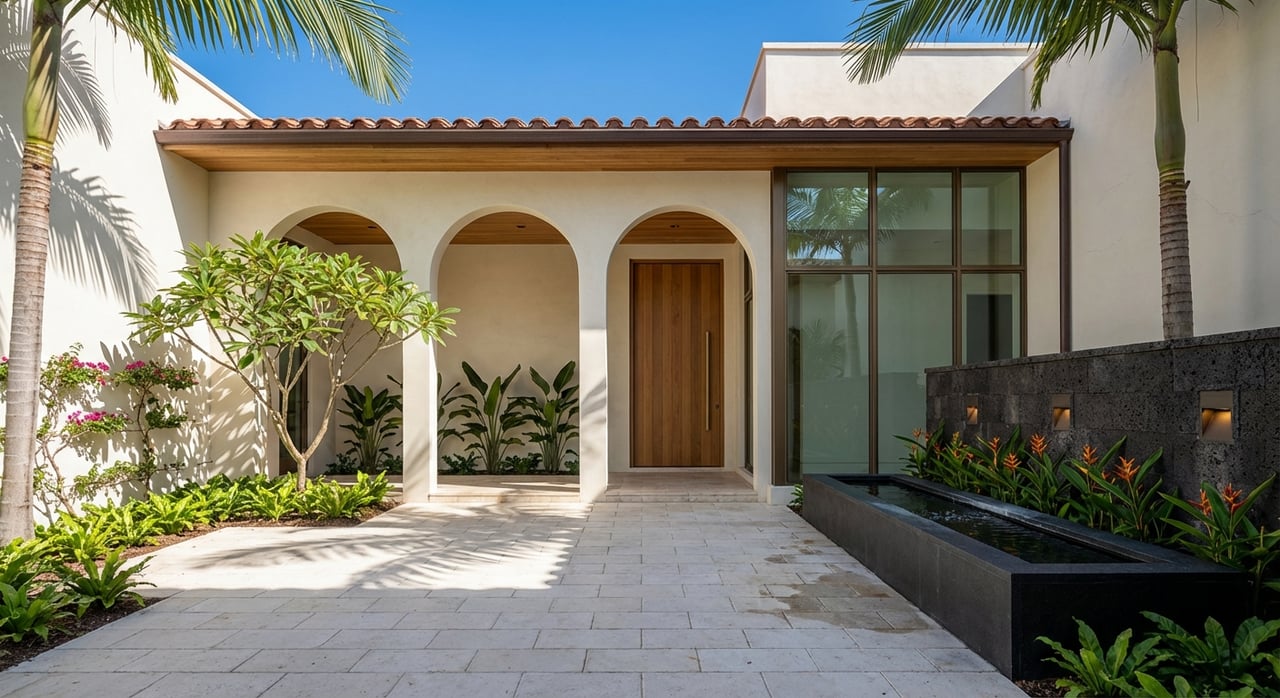
Mediterranean cues show up as stucco walls, red tile roofs, arched openings, and shaded loggias around central courtyards. While less common than island‑modern forms in Kahala Kua, this lineage is part of Honolulu’s broader architectural story. Historic examples across town, like documented Mediterranean Revival residences, show how villa motifs adapt to the local climate and indoor‑outdoor lifestyle (historic Mediterranean example in Honolulu). In Kahala Kua, you may see these details in larger estates that favor traditional proportions and ornamental metalwork.
Custom design‑build estates
Custom estates are one‑of‑a‑kind responses to steep topography and view corridors. These homes often combine island‑modern layouts with high‑performance envelopes, corrosion‑resistant finishes, and engineered foundations. Multi‑pavilion plans, terraced outdoor rooms, and carefully framed view lines are common. When executed well, the result is a property that protects and amplifies the panorama while delivering a quieter maintenance profile over time.
How design choices drive enjoyment and price
Design in Kahala Kua is not only about looks. It is about how the home functions on a ridge, how the view is used, and how the materials hold up in a coastal climate. These elements directly influence both day‑to‑day living and resale value.
Layout and plan essentials
Where the view is experienced matters. Buyers place the highest value on ocean or mountain views that are visible from the great room, kitchen, primary suite, and the main lanai. On hillside lots, split‑level plans often put these rooms on the rim while tucking secondary spaces upslope. Academic studies on amenity pricing show that view quality and usability carry measurable price premiums over comparable homes without similar outlooks (hedonic view research).
The power of the view
Not all views are equal. A full, unobstructed ocean panorama from the main living area can drive double‑digit percentage premiums in coastal luxury markets, while partial or city views typically add less. Permanence also matters. When you evaluate a home, ask about adjacent build rights, local height rules, and any tree easements that could affect the sightline over time. Honolulu’s planning code includes policies and tools related to view planes and corridor considerations, which is why a quick check of local rules is prudent during due diligence (Honolulu planning code reference).
Materials that last in Kahala Kua
Salt air and trade winds are part of the charm, yet they raise the bar for durability. Best practices for coastal homes emphasize corrosion‑resistant fasteners and hardware, such as stainless steel with appropriate grades, along with quality concrete detailing and drainage strategies. Exterior fenestration often performs best with heavy‑duty anodized aluminum and coastal finish packages. Larger overhangs and covered lanais help shield glass and reduce maintenance, which supports buyer confidence at resale. Guidance aligned with the FEMA Coastal Construction Manual captures these durability principles well (coastal construction guidance overview).
Windows, doors, and performance details
In newer builds and higher‑end remodels, you will often see impact‑rated glazing, improved seals, and well‑engineered drainage at large door systems. These upgrades keep water and salt out, reduce service calls, and extend finish life. On listing day, clear documentation of product specs and finish grades can substantiate price.
Energy and resilience features
Solar PV and battery storage are highly marketable in Hawaii, especially when the system is owned and properly permitted. A Hawai‘i case study found that PV systems added measurable value to O‘ahu homes, with average premiums above 5 percent in local data. Accurately documenting system size, ownership, and interconnection history helps appraisers apply the value correctly and streamlines buyer review (Hawai‘i PV value study).
Engineering on steep lots
Foundation and slope solutions are major cost drivers on ridge properties. Depending on soil and grade, builders may use drilled shafts or deep piles, engineered retaining walls, and robust drainage to stabilize structures and outdoor spaces. Terraced yards, pool decks, and driveways can introduce ongoing maintenance, which is why design integration and landscape screening are important. For background on drilled shaft solutions commonly referenced on steep sites, see the FHWA manual overview (drilled shaft manual reference).
HOA design controls and long‑term outlook
Many Kahala Kua listings reference neighborhood design guidelines intended to protect community character and sightlines. While specific CC&Rs are not broadly published online, it is smart to request the current guidelines before you design a remodel or evaluate view permanence. On the public side, Honolulu planning policies consider view impacts in certain project reviews. Together, HOA controls and city rules can support value by lowering the risk of future obstruction, though you should always verify the details for a specific property.
Buyer checklist for Kahala Kua
- Stand in the kitchen, great room, and primary suite. Confirm how much of the view you see without moving.
- Sit on the main lanai. Ask how often it is usable with trade winds and during rain.
- Review materials and specs. Look for coastal‑grade metals, impact‑rated glass, and documented finish packages.
- Ask for geotechnical and foundation reports. Note retaining walls, drainage design, and maintenance needs.
- Confirm solar PV ownership, permits, and system size. Gather interconnection details for valuation.
- Discuss view permanence. Check adjacent build rights and local height rules before you bid.
Prep tips for sellers
- Lead with the experience rooms. Photograph and film the great room, primary suite, kitchen, and main lanai during clear conditions.
- Show furniture‑level views. Buyers should see how daily life aligns with the panorama.
- List performance details. Call out coastal‑grade hardware, glazing specs, drainage upgrades, and envelope work.
- Document permits and reports. Provide a tidy package for structural, roofing, solar, and foundation elements.
- Consider light updates. Strategic finishes, staging, and landscape edits that emphasize view corridors can lift price.
Work with a design‑savvy advisor
In Kahala Kua, the right strategy blends architecture, presentation, and financial planning. You deserve guidance that understands how view‑first layouts, durable materials, and ridge engineering translate into market value, and how to plan a tax‑aware exit when the time is right. If you are weighing a sale, exploring a 1031 exchange or DST, or considering value‑add upgrades before listing, connect with Francein Hansen to map the best next step.
FAQs
What architectural styles define Kahala Kua luxury homes?
- You will primarily see contemporary island designs, a smaller number of Mediterranean‑influenced homes, and bespoke custom estates that respond to the ridge and views.
How much do ocean views add to a Kahala Kua home’s value?
- Studies show view premiums vary by quality and permanence, from single‑digit percentages for partial views to double digits for full panoramas from main living areas (amenity pricing research).
Which materials hold up best in Kahala Kua’s coastal climate?
- Coastal guidance favors corrosion‑resistant metals, quality concrete detailing, heavy‑duty anodized aluminum for openings, and deep overhangs to protect glass and finishes (coastal construction guidance).
How permanent are views in Kahala Kua, and what should I verify?
- Ask about adjacent parcel build rights, neighborhood design controls, and local height rules, and review Honolulu planning references related to view corridors (planning code reference).
Do solar panels help resale value on O‘ahu ridge homes?
- Yes. A Hawai‘i case study found average sale price premiums above 5 percent for homes with owned PV systems, assuming proper permits and documentation (Hawai‘i PV study).
What should I know about foundations for steep Kahala Kua lots?
- Many homes use drilled shafts or deep piles, engineered retaining walls, and robust drainage, so request geotechnical reports and maintenance history for informed comparisons (drilled shaft overview).