
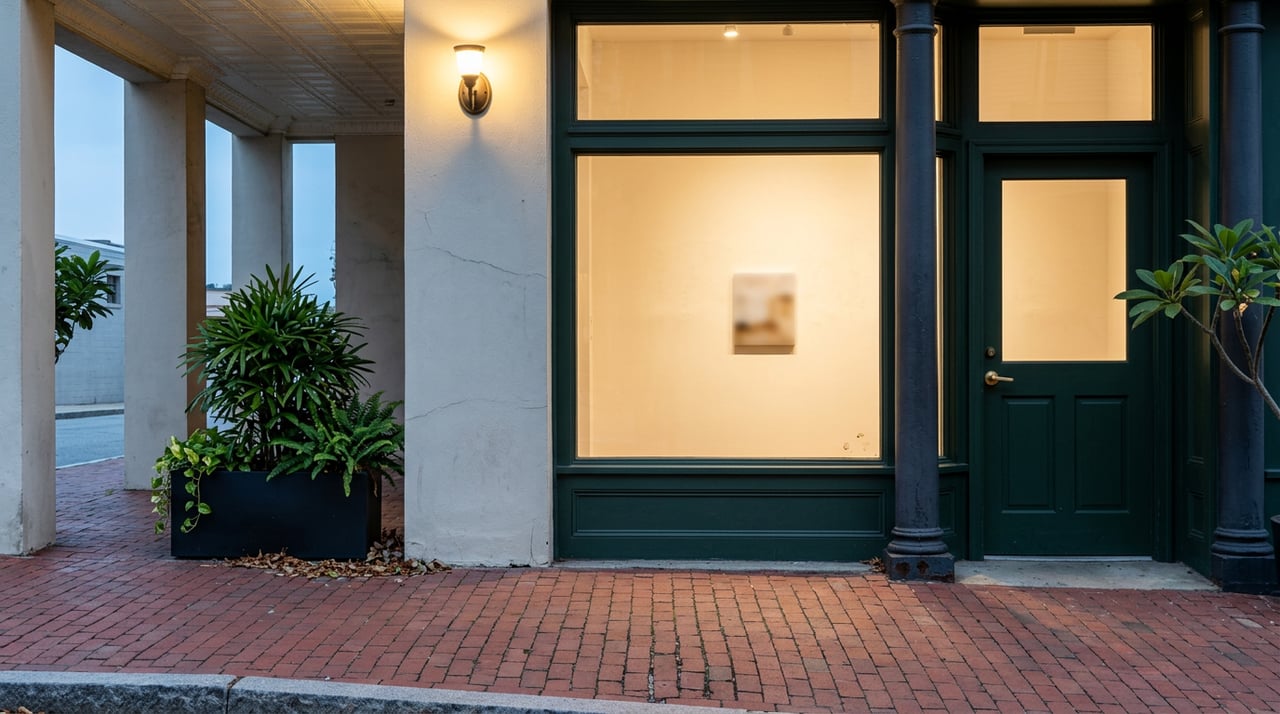
For years the honest answer about a Friday night in Chinatown was that you went for one thing and left. A gallery opening, then dinner in Kakaʻako. A show at Hawaii Theatre, then drinks back in Kaimukī. The four blocks between King and Beretania held pieces of an evening, never the whole thing.
August 2026 is the month that argument stops working. Between the theatre's marquee, the Downtown Art Center's programming, a First Friday roster that has quietly rebuilt itself, and a food scene that has absorbed both a Filipino-American breakout and a wave of regional Chinese cooking, the district now holds an entire evening inside a walkable radius. Here is what a resident who already knows the neighborhood should actually put on the calendar this month.
The Four-Block Radius, Defined
The working definition of the Chinatown Arts District is narrower than most people assume. The Downtown Art Center uses the acronym HEART for Heritage, Entertainment, Arts and Culture, Restaurants, and Theatre and Performing Arts, and locates the district between Bethel and Nuʻuanu Avenues, bounded by King Street and Beretania Avenue. Everything below sits inside that box or one block off it. If you can park once near the Chinatown Cultural Plaza lot on Beretania, you can do the entire night on foot.
What August Puts on the Calendar
Two dated anchors do most of the work this month, and they sit eleven days apart.
| Date | Event | Venue |
|---|---|---|
| Tue Aug 4 & Wed Aug 5 | Ronny Chieng & Friends, two nights only | Hawaii Theatre |
| Fri Aug 7 | First Friday gallery walk | HEART District, throughout |
| Sat Aug 15, 10 AM–12 PM | HEART District walking tour, $20, 20 slots | Downtown Art Center |
| Every Fri evening | DAC First Friday programming, 5:30–8 PM | Downtown Art Center |
The comedy nights are the marquee draw. Ronny Chieng & Friends return on Tuesday August 4 and Wednesday August 5, 2026 for a comedy variety music show with a surprise line-up of stand-up comedians, movie stars, and local music, framed as a love letter to the people of Hawaii and to the local independent businesses and restaurants that make the state special. That framing matters for a resident. The theatre has stood in Chinatown since 1922, and proceeds from the run go directly to restoration of the building's exterior along with community programs, youth education, and live performances. A ticket buys the show and also buys the building another season of paint and plaster.
The August 15 walking tour is the sleeper. Historian Gary Coover and artist and educator Susan Hogan lead a two-hour walk of the HEART district on Saturday August 15 from 10 AM to noon, $20 per person, with only 20 slots. If you have lived downtown for years and still could not name the architects of the buildings between Nuʻuanu and Smith, this is the correction.
First Friday, Without the Tourist Version
First Friday is easy to write off if the last time you walked it was during the crowded stretch a few years back. The roster in 2026 is quieter, more anchored in the district, and easier to plan. The Downtown Art Center itself now runs a full 5:30 to 8 PM evening in all its spaces and galleries every First Friday of the month, with special art activities, performances, make-and-take crafting projects, exhibition opening receptions, and artist meet-and-greets across all DAC spaces and galleries.
Around it, the reliable venues have re-formed. Nextdoor on Hotel Street remains the underground music room, described as Hawaii's underground art and music haven where jazz, hip hop, electronic, and heavy metal have all found a home. Dragon Upstairs, Hank's Cafe, JJ Dolan's, Murphy's, Arts at Marks Garage, Black Cat Tattoo Studio, Blank Canvas, and Lucky Belly all participate on the same night, with Lucky Belly's kitchen holding to a 5 PM to midnight window on First Friday evenings. That density is the point. A resident planning the night does not need a car between venues.
The June 2026 DAC exhibition set a bar that has held into summer. Hawaiʻi Craftsmen's "Fiber Hawaiʻi 2026: In, Of, or About Fiber" ran June 5–27 in the DAC Main Gallery as a biennial juried show, juried by Marques Hanalei Marzan, a celebrated Hawaiian fiber artist and Cultural Advisor at the Bishop Museum. That is the caliber of jurying the Chinatown galleries are now attracting.
The Food Question, Answered by Recent Openings
The complaint about Chinatown for the last decade was that the food never quite caught up to the art. That gap has closed in 2026, and it closed in two directions at once.
The first is a Filipino-American arrival. Mama Guava opened in the old Pig & the Lady space with crispy lumpia rolled in look fun, anato-red banh xeo stuffed with shrimp and longanisa, and a longanisa smash burger with garlic fries, cooked by Monique Cadavona, who cooked at MW Restaurant and The Pig & the Lady before heading to New York City and starting a Hawaiʻi Filipino-themed catering business. The catch is scheduling. Mama Guava has been running as a lunchtime pop-up in the old Pig & the Lady space, Tuesday to Saturday 11 AM to 2:30 PM, at 83 N. King Street, so verify the current status before you plan around it.
The second is regional Chinese. A wave of new Chinese restaurants has opened in Chinatown recently, from Guizhou to Hunan regional cooking, including the well-reviewed Daji Spicy Pavilion. For a resident who has watched the same three menus rotate for a decade, this is the actual news of the year. The correct move on a First Friday is to eat where the mala fans are eating, then walk two blocks to the gallery.
The Detour Worth Making
If you are willing to leave the four-block radius for one appointment, make it Keʻeaumoku. Midtown Eats opened on the ground floor of The Park on Keʻeaumoku as a food hall including FEAST by Jon Matsubara, Middle Eats, Soul Chicken, and Serg's Mexican Kitchen, with the grand opening on January 17, 2026. Seven months in, the roster has grown. As of the July 28, 2026 count, Midtown Eats has added Aloha Sugarcane, Boba Bing, K Park Bar, King Thai, Mangiamo Gelato, Ms. Nguyen, Ninja Sushi, Sadie's BBQ, and Sakurajima. That is a lunch-through-late-night rotation inside one building, and it is the closest Honolulu has produced to the food-hall model that anchored downtown revivals on the mainland a decade ago.
The other pending arrival is the Kāhala side of the map. Alan Wong's is expected to open at The Kāhala Hotel & Resort in March at the earliest, with Wong as consulting chef and an initial menu featuring classics from the King Street restaurant, and new dishes with locally grown, caught, and raised ingredients appearing later. The ginger-crusted onaga, once ordered more than 10,000 times, is expected to return. That is not August news, but it is the context for why the district's dining conversation reads different than it did in 2024.
One Friday, Sketched Out
For the reader who wants the plan without the theory:
- 5:30 PM: Park once at the Chinatown Cultural Plaza lot on Beretania, walk to the Downtown Art Center for the First Friday opening reception.
- 6:30 PM: Cut across to Daji Spicy Pavilion or one of the newer regional Chinese rooms for an early dinner.
- 8:00 PM: Loop back through Hank's, JJ Dolan's, and Dragon Upstairs for the music. Nextdoor if the lineup pulls you.
- Late: Lucky Belly's kitchen holds until midnight if you skipped dinner earlier.
For the reader planning around the marquee, buy the Aug 4 or Aug 5 Ronny Chieng ticket first, work everything else backward, and hold the Aug 15 walking tour as the daylight bookend.
Why This Matters Beyond the Weekend
A neighborhood that can hold a full evening inside a walkable radius is a different kind of neighborhood than one that cannot. The Chinatown Arts District has been the second kind for most of the last two decades. In 2026 it became the first, and the shift shows up in small ways that only a resident would register: which storefronts turned over, which chefs came back, which nights the sidewalks are full at nine. For anyone who owns a condo in the urban core, that arc is worth watching for reasons that go beyond dinner reservations.
If you own downtown and you are curious about how the district's evolution is reading in the market, or if you are weighing a move into the urban core and want a resident's read rather than a portal's, Francein Hansen is available for a Strategy Session.